How Whole-Food, Plant-Based Nutrition and Hypnosis Work Together To Help You Thrive After 50.
Imagine if every bite you took, and every thought you thought, worked together to heal your body.
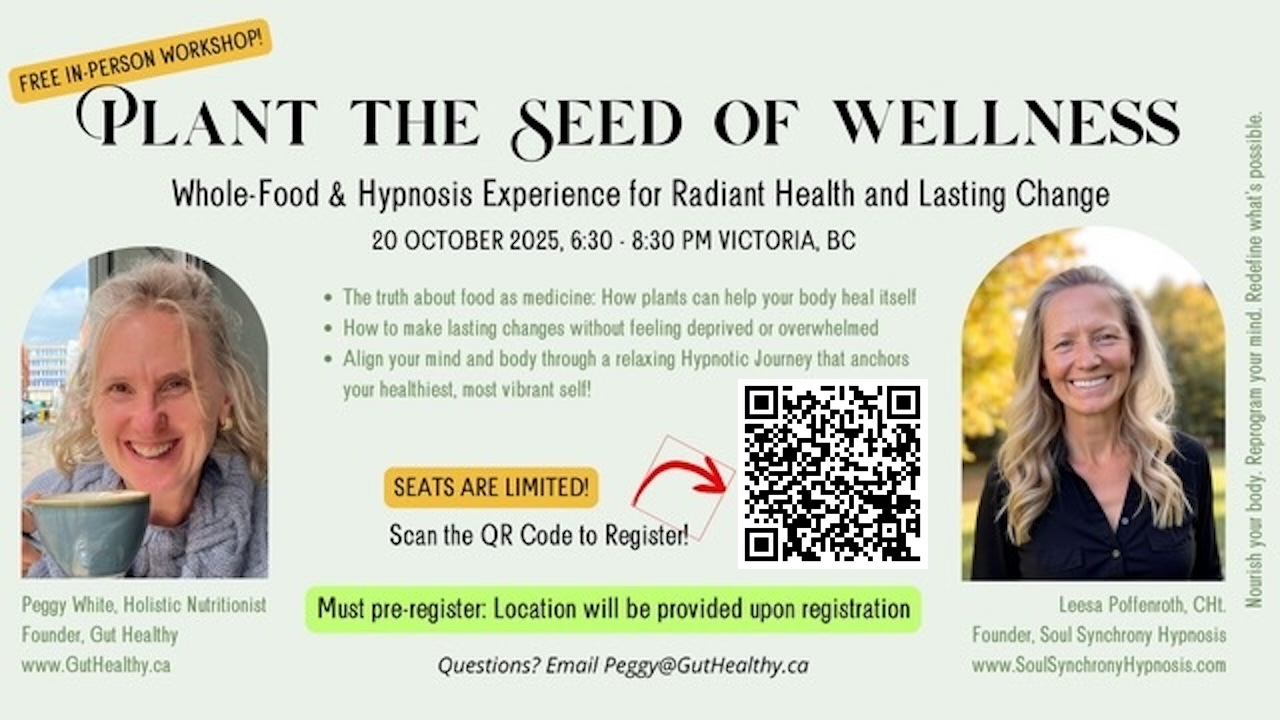
This empowering 2-part workshop combines science-backed plant-based nutrition with the power of hypnosis to help you create real, lasting wellness from the inside out.
Together, Peggy White, Holistic Nutritionist and founder of Gut Healthy, and Leesa Poffenroth, CHt, Certified Hypnotherapist and founder of Soul Synchrony Hypnosis, will guide you through a unique experience that bridges mind, body, and spirit.
In this live session, you’ll:
Learn how plant-based nutrition can reduce inflammation, balance hormones, and support graceful aging
Experience a guided hypnosis session that helps you reprogram cravings, boost motivation, and connect to your vision of lifelong vitality
Future-pace your transformation—so healthy choices feel automatic, natural, and joyful
Nourish your body. Reprogram your mind. Redefine what’s possible.
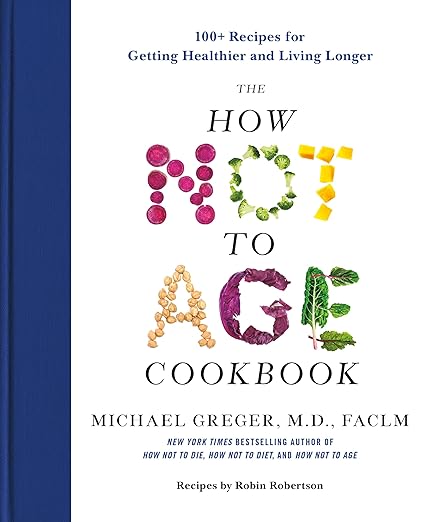
If you’ve been following me for a while, you’ll know I love anything by Michael Greger, including his nonprofit site, NutritionFacts.org. So I was especially excited to get my hands on his latest release, The How Not to Age Cookbook, and I wasn’t disappointed. It’s always wonderful to have another whole-food, plant-based cookbook on the shelf. These kinds of books take so much of the thought and guesswork out of preparing WFPB meals.
The introduction is brief but packed with helpful information. I especially appreciated the “Asked and Answered” section, which covers just ten questions but they’re some of the most common ones Dr. Greger receives. My favourite? “Raw, Roasted, or Toasted [nuts]?” A few years ago, I researched this question myself and found it tricky to pin down. Now, here it is explained clearly in print. (The answer: raw.)
The recipes themselves make meal planning simple and approachable. There’s a wide range of options, from breakfasts and snacks to mains, organized into categories like burgers, pastas, beans, grains, and sweet treats. The photos are gorgeous, and the recipes are well laid out. My current favourite is Umami Sauce 2.0, since I’ve been looking for a tasty alternative to soy sauce on my veggies. A close second is the Blueberry Chia Pie, not only delicious, but visually stunning!
If you’re looking to dive deeper into whole-food, plant-based cooking or simply expand your WFPB cookbook collection, I highly recommend this one.
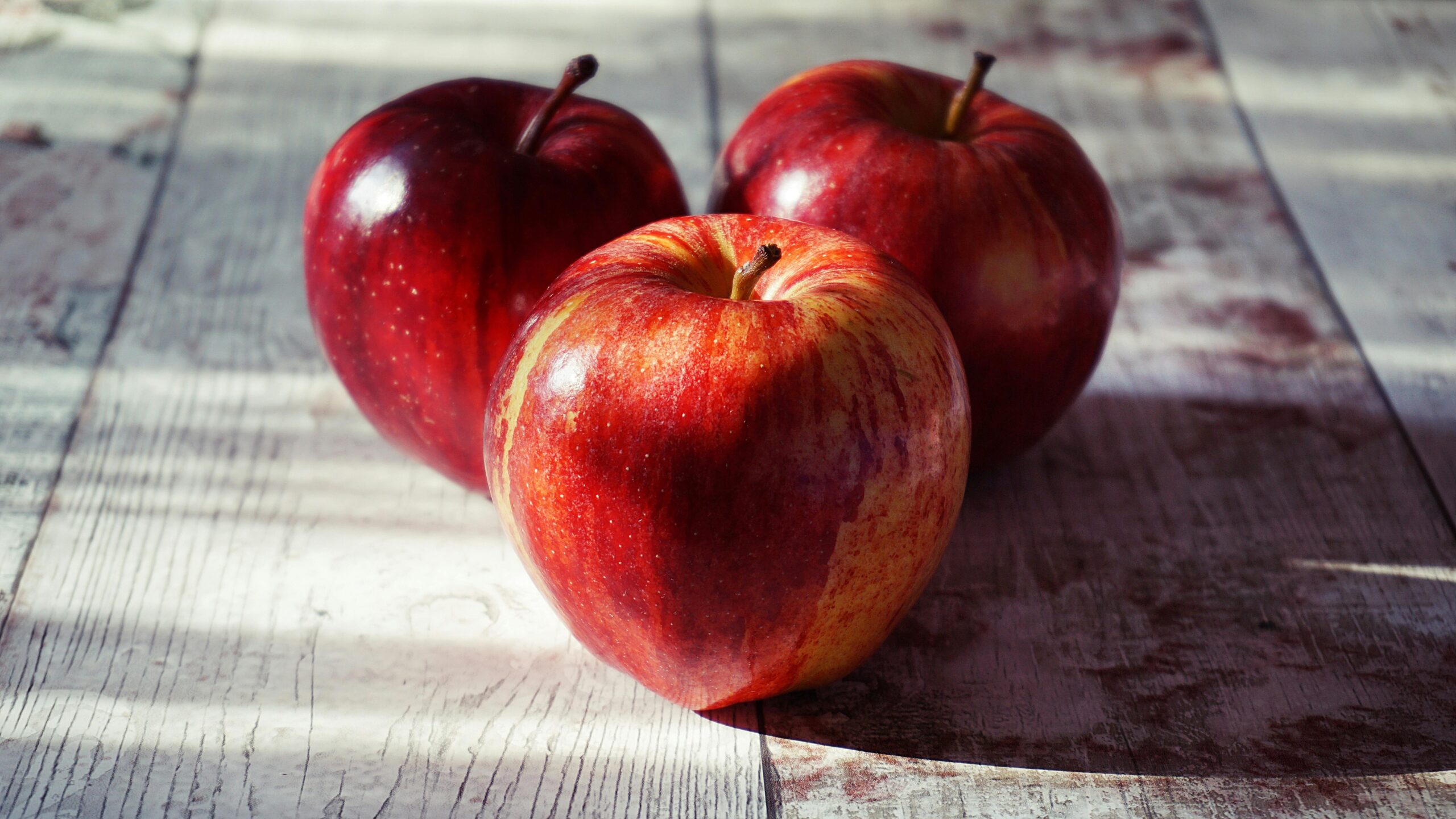
This is a great article highlighting the many health benefits of apples. They help protect against stroke, feed beneficial gut bacteria, and lower the risk of type 2 diabetes, just a few more reasons to enjoy this seasonal classic. With apple season in full swing, it’s the perfect time to bite into their crisp sweetness or add them to your favourite fall recipes.
Among other things, this article also includes some fun facts like how apples float in water because they’re made up of about 25% air, and that the only apple native to North America is the crabapple, which may be tart raw but turns delicious in jams, jellies, and cider.
So go ahead, enjoy an apple (or two) a day. Your body will thank you!
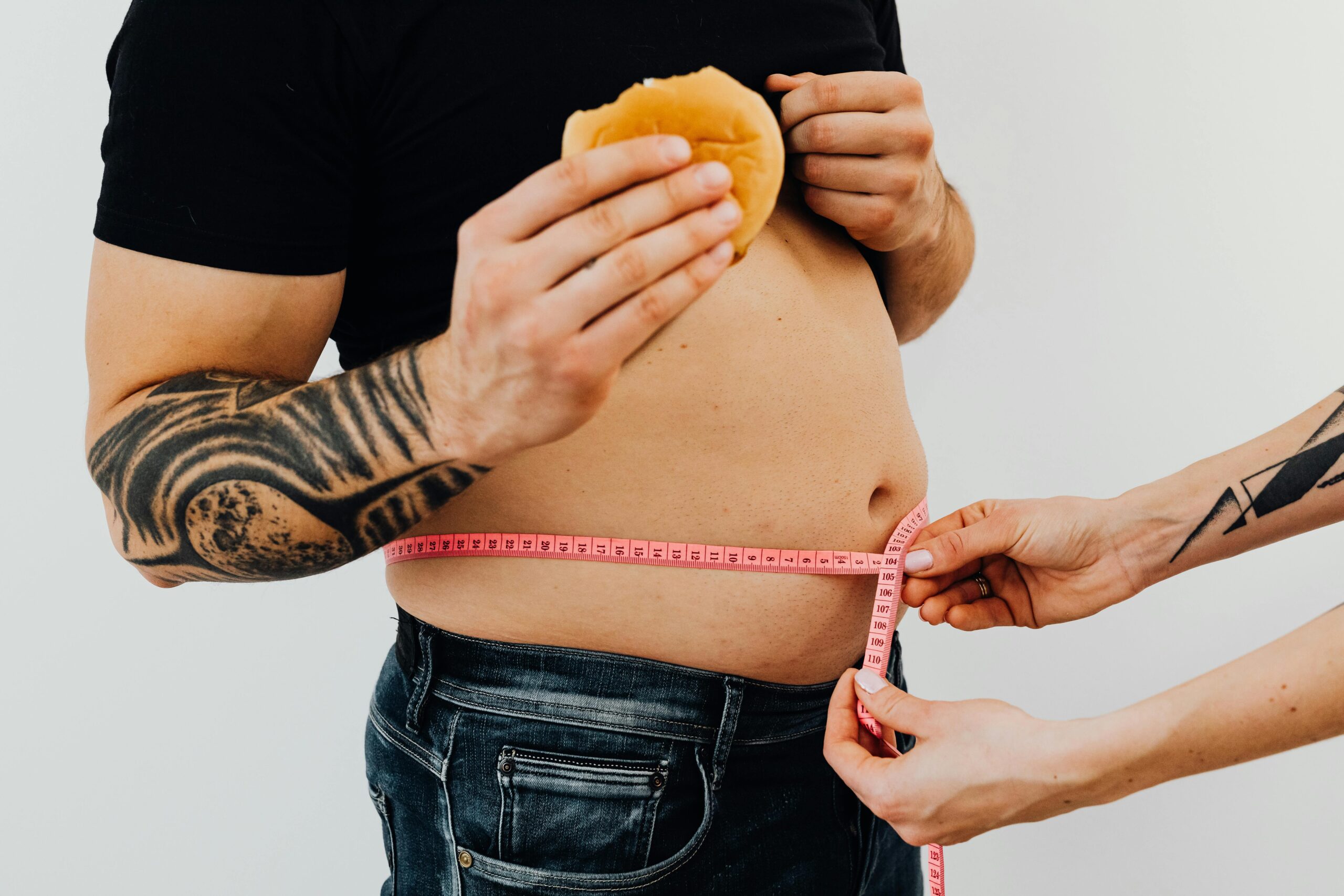
If you’ve ever blamed yourself for overeating or are struggling with weight, you’re not alone. But according to nutrition scientist Dr. Kevin Hall, the problem isn’t personal weakness, it’s the food environment we all live in.
Hall, who was a leading researcher at the National Institutes of Health until April when he retired after denouncing censorship of his research, has run some of the most rigorous clinical trials in nutrition science. His studies found that when people were given ultraprocessed foods, the packaged, engineered products that now make up more than half of the average American diet, they ate hundreds to over a thousand extra calories per day compared to when they ate meals made from whole foods.
Why? These foods are designed to be both energy-dense (lots of calories in a small portion) and hyperpalatable (that irresistible mix of sugar, salt, and fat that keeps you coming back for more). In other words: it’s not about willpower. These foods override the body’s natural hunger and fullness signals in ways we’re only beginning to understand.
A few decades ago, “junk food” was an occasional indulgence, like a slice of Grandma’s pie. Today, highly processed treats are cheap, available everywhere, and heavily marketed, even to kids. That constant exposure makes it almost impossible to avoid overeating.
Hall stresses that some ultraprocessed foods can still support a healthier diet, think premade sauces, frozen vegetables, or ready-to-eat meals lower in added sugar, salt, and saturated fat. The key is to use these convenient foods to help build meals centered on whole grains, vegetables, fruits, and legumes.
The bottom line? Overeating isn’t a personal failing, it’s a predictable response to a food environment designed to push us toward cheap, calorie-dense, addictive foods. While individuals can make strategic choices, real change will require reshaping the food system so that nourishing options are the easy, affordable default.
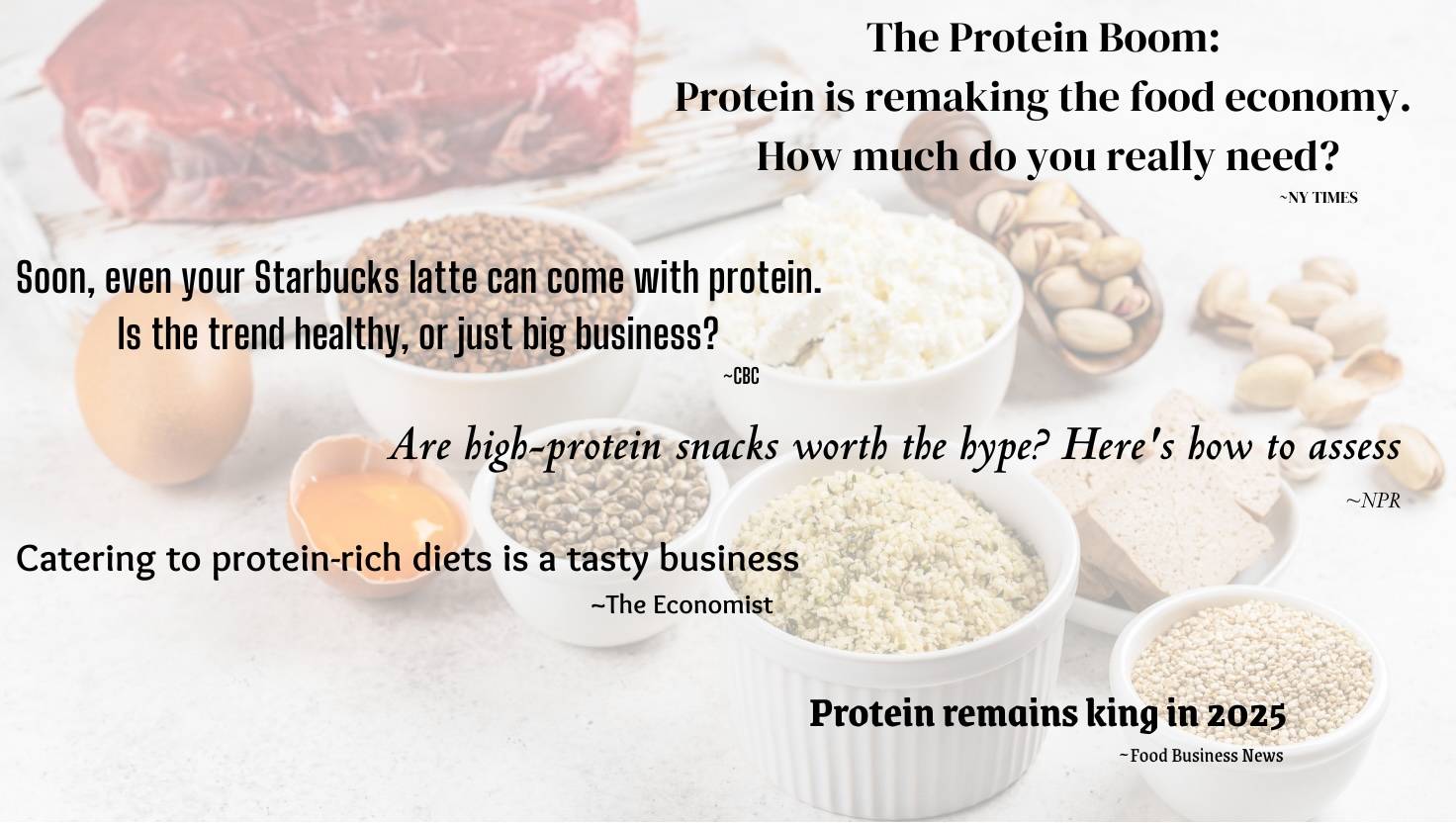
Protein: Superstar or Just Smart Marketing? Probably one of the most common questions I get as a whole-food, plant-based eater is: “But where do you get your protein?” Protein is everywhere in the news these days, it’s a food trend and big business. And sure, we do need enough of it: protein helps build and repair tissues, keeps muscles and bones strong, and supports your immune system.But here’s something that might surprise you: true protein deficiency is almost unheard of in industrialized countries, even for people who don’t eat animal products. Most American adults eat well over the recommended amount and Europeans aren’t far behind. As long as you’re eating enough calories from a variety of whole foods, getting adequate protein is rarely a problem. The real concern is for the millions of people worldwide who don’t have enough food, not those choosing beans over beef.A 2024 survey by the International Food Information Council found that 71% of U.S. consumers wanted more protein in their diet, up from 59% just two years before. That raises a good question: do we truly need more protein to be healthy, or are we being nudged by clever marketing?Before we answer, let’s zoom out for a second. Food isn’t just about protein; it’s thousands of compounds your body breaks down and uses. Broadly, nutrients fall into two groups:
Macronutrients
Micronutrients
Carbohydrates
Fat
Protein
Fibre *
Vitamins
Minerals
Phytochemicals *
Fibre and phytochemicals are not formally classified, but I believe they deserve their own spot in the overview!Carbs break down into sugars, fats into fatty acids, and proteins into amino acids. Vitamins, minerals, and phytochemicals don’t give you energy directly, but they’re essential for everything from immunity to metabolism.Back to protein. It’s made up of 21 amino acids. Your body can make 12, but the other 9 (the “essential” ones) have to come from food. Complete proteins contain all nine in the right amounts. Many animal foods fit this bill, but so do some plants, like soy, quinoa, amaranth, buckwheat, and hemp seeds. And even if a plant food is “incomplete,” your body is smart enough to combine amino acids from different meals throughout the day, no need for complicated food pairing charts.
Interesting fact: unlike carbs and fat, your body doesn’t store amino acids for later, so you need a steady supply from food every day.
When people think of protein, they often picture steak, chicken, fish, eggs, or dairy. These are dense sources and contain all the essential amino acids in proportions similar to our needs, that’s why they’re sometimes called “high quality.”
Plant foods can deliver the same building blocks, just in slightly different ratios. Beans, lentils, tofu, tempeh, edamame, peas, whole grains, nuts, and seeds are all good sources. And a few plants, like soy, quinoa, and hemp seeds, are complete proteins all on their own.
The cool thing about plant protein is the company it keeps: fibre, antioxidants, and phytochemicals that protect your heart and help reduce inflammation. They’re also naturally lower in saturated fat. That doesn’t make animal protein “bad,” but large amounts of red or processed meat have been linked with higher risks for certain chronic diseases, so balance is key.
Protein is important, no argument here, but the bigger picture matters, too. Instead of stressing over grams or chasing the latest “high-protein” snack, focus on eating a variety of whole, minimally processed foods. Beans, lentils, tofu, nuts, seeds, veggies, and whole grains can easily meet your needs. Aim for a colourful plate and let protein take its natural place as one piece of the nutrition puzzle, not the whole story.
So remember: If you’re eating enough food so you don’t lose weight and eating a variety of whole foods, it’s not hard to consume enough protein.
Be well,
Peggy
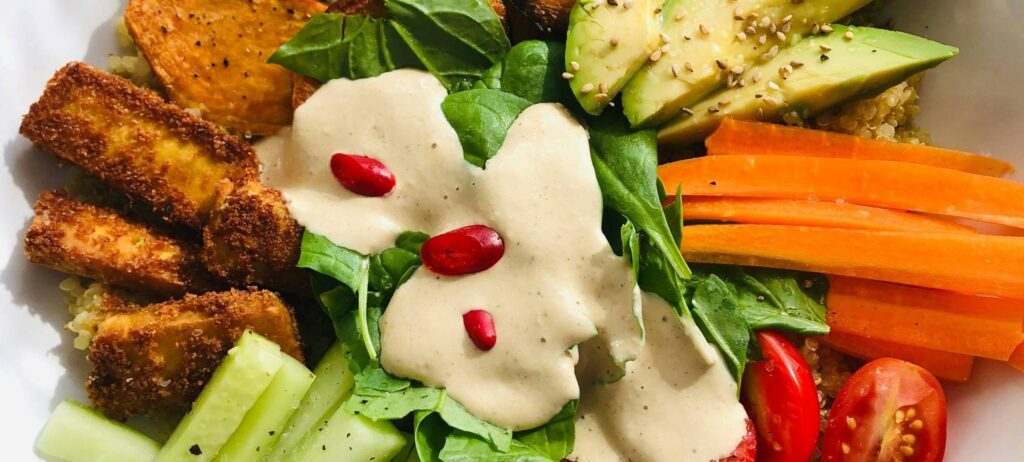
As we slide into fall and harvest season, this cozy butternut & tofu sheet pan dinner makes the most of local stars like squash, peppers, and tomatoes. It’s a rainbow of colour and flavour, perfect for an easy weeknight meal (and even better the next day!).
For a creamy finish, spoon my quick Tahini–Lime Drizzle over the roasted veggies and tofu. Its bright, nutty flavour plays perfectly with the chipotle – maple glaze.Tahini-Lime Dressing
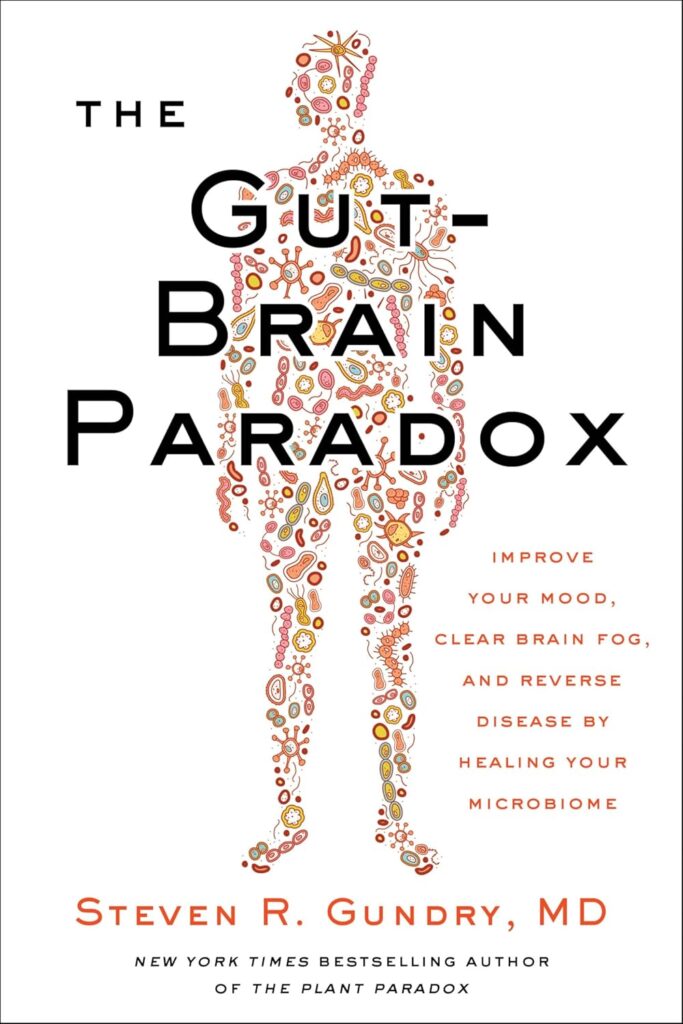
Book Review: Gut-Brain Paradox by Steven GundryNot every book with a shiny cover and big-name endorsements is worth your reading time or your trust. When I picked up The Gut-Brain Paradox, it looked promising, but I quickly learned that the author’s nutrition advice isn’t well respected. I did some digging so you don’t have to, and I’m sharing what I found to save you the trouble. Give this book a pass.
Bits & Bites:Thai Inspired Cooking Class: My next cooking class through Panorama Rec is on Tuesday, October 21. We’ll be making a chickpea curry, a classic pad Thai and a velvety rice pudding. All recipes are gluten-free and whole-food plant-based. I’d love your help sharing this with anyone who might enjoy it. After my last class didn’t run due to low sign-ups, I’m especially excited to see this one take off.
New & Improved Recipes! I’ve given my recipe section a little makeover. From now on, each recipe is easier on the eyes and on your printer plus you can leave a review, ask a question or share a comment right on the page. I’d love to hear what you try and how it turns out. Let’s get some conversations going!
Fuelling My Knowledge: I’m thrilled to share that I was awarded a full scholarship for the T. Colin Campbell Center for Nutrition Studies’
Food & Sustainabilitycertificate program. I’m so grateful for the opportunity to deepen my knowledge about how our food choices impact personal and planetary health and I can’t wait to bring what I learn back to you!
When I went looking for a new gut health read this summer, this one popped up, so I borrowed it from the library. At first glance, it looked reputable: Steven Gundry is an MD and a New York Times bestselling author, the back cover is plastered with endorsements (including big names like Daniel Amen and Terry Wahls), and nearly a third of the book is the reference list. Promising, right? Wrong. The subtitle: “Improve your mood, clear brain fog, and reverse disease by healing your microbiome” sounded right up my alley, right? Wrong again.
This book is riddled with pseudoscience, and one of the worst offenders is Gundry’s advice to avoid all foods containing lectins (beans, lentils, whole grains, bell peppers, soy, potatoes, etc.), foods that are staples in Blue Zone populations, some of the longest-lived people on Earth. But the real jaw-dropper came in the “Do: Get Your Fiber” section, where he writes: “Finally, don’t forget your animal fiber.”
Animal fiber?! Is that even a thing? According to Gundry, examples include “ligaments, tendons, bones, and cartilage of meat and fish” and contribute to gut health. He even cites a study so I checked it. The article, from the Journal of Animal Science, is titled: “Fermentation of animal components in strict carnivores: A comparative study with cheetah fecal inoculum.” Yes, you read that right. His recommendation for humans is based on cheetah poop.
At that point, I dug deeper. I found a scathing review by Drs. T. Colin Campbell, PhD, and Thomas Campbell, MD (T. Colin Campbell Center for Nutrition Studies) of Gundry’s earlier book, The Plant Paradox. And Dr. Michael Greger of NutritionFacts.org made a short video about that same book with the tagline: “A book purported to expose the ‘hidden dangers’ in healthy foods doesn’t even pass the whiff test.”
Now, to be fair, Gundry does offer some decent advice: eat fermented foods, polyphenols, vegetables, healthy fats, get vitamin D, avoid processed foods, and don’t overdo protein. But with all the pseudoscience, and his supplement and skincare lines, it’s hard not to call him a quack out to make a buck.
I’ll let the Campbells’ words about The Plant Paradox sum it up: “What a shame that this type of unscientific nonsense creates so much unnecessary confusion, with deadly consequences.”
Think electrolytes are just for athletes? Think again! Your body relies on them every day and summer heat makes them even more important. Dive into my August newsletter for tips, a zucchini recipe, a book review, and more.
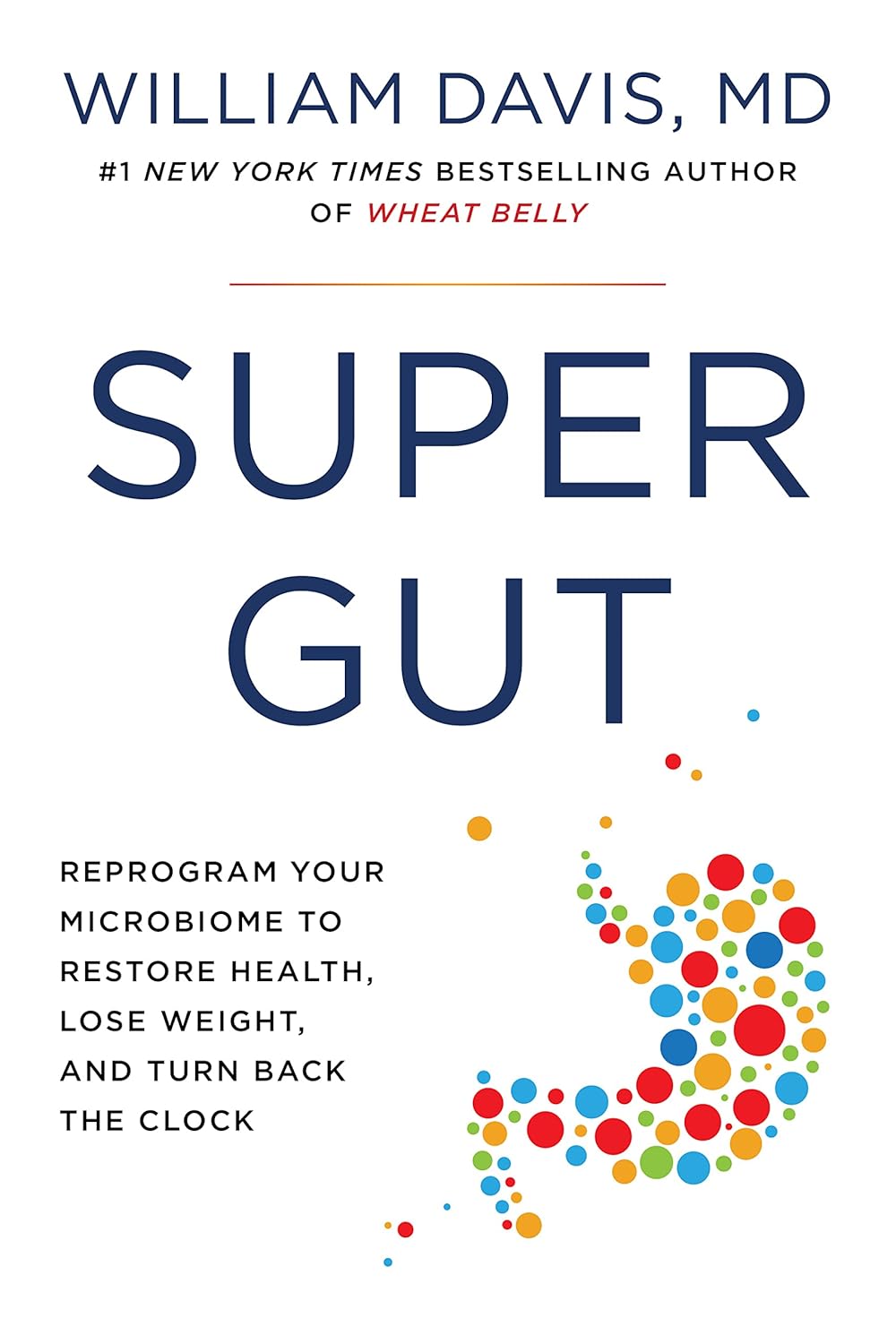
This is a book I often recommend, and I regularly hear back that it’s made a real difference. If the author’s name sounds familiar, you might recall Wheat Belly, his bestselling book from over a decade ago.
Super Gut is an engaging, easy read that manages to entertain while explaining complex science. It’s divided into four parts with cheeky titles: Bowel Blues, Frankenbelly & Friends, Gut Reaction, and Build Your Own Super Gut: A Four-Week Program. Davis draws strong connections between gut health and a range of modern ailments, then outlines practical protocols for healing the gut.
In Part 2, Davis explains how modern inventions like antibiotics, pesticides, herbicides, and processed diets have contributed to what he calls the “Frankenbelly”, a microbiome so disrupted it’s nearly unrecognizable as human. He discusses the importance of mucus in gut health, the role of prebiotic fibers in feeding beneficial bacteria, and how changes in the gut environment can lead to bacterial and fungal overgrowth.
Part 3 dives into SIBO (Small Intestinal Bacterial Overgrowth) and SIFO (Small Intestinal Fungal Overgrowth). Davis explains how these imbalances occur, the symptoms they produce (like food intolerances, skin rashes, and sugar cravings), and their connection to conditions such as obesity, IBS, Parkinson’s, and depression. While the information can be sobering, he offers hope by emphasizing that healing is possible and well worth the effort.
Finally, Part 4 outlines a four-week gut-healing protocol, including recipes for homemade probiotic-rich yogurt and other microbiome-friendly foods. Davis’ protocol requires readers to eliminate factors that can disrupt the microbiome. This list includes avoiding sugar, synthetic sweeteners, and emulsifiers, to name a few.
Although I don’t agree with all of his nutritional recommendations, if you’re curious about the gut microbiome and want actionable steps to improve your health, Super Gut is a fascinating and worthwhile read.
Summer brings sunshine, fresh produce, and outdoor meals but it also comes with a higher risk of food poisoning. In this month’s newsletter, I’m diving into how food borne illness can affect your gut far beyond a day or two of discomfort, including its surprising link to long-term digestive issues like SIBO and IBS. Plus, I’m sharing a gut-friendly plant-based recipe and announcing my new cooking classes being offered through Panorama Recreation.
“Right now, there is quite likely to be a conversation you are trying to avoid. It is probably one that is important to you, but it has a quality of discomfort to it.”
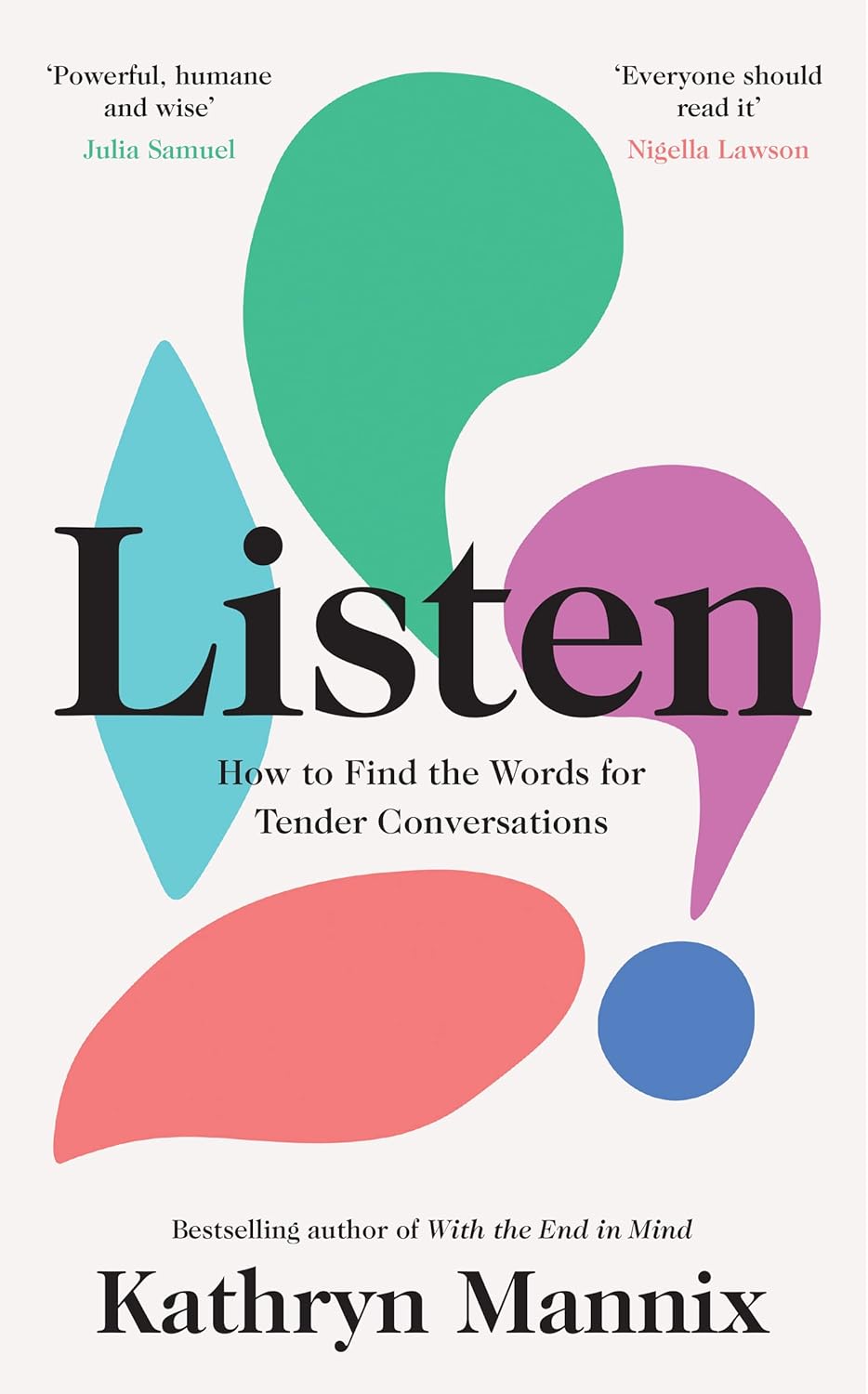
This month, I took a break from my usual nutrition-focused reading and finally sat down with Listen: How to Find the Words for Tender Conversations by Kathryn Mannix. It’s been sitting in my to-read pile since it was published in 2021. (You may know Mannix from her bestselling book With the End in Mind.)
As I’ve mentioned before, lifestyle medicine is built on six foundational pillars: a whole-food, plant-predominant eating pattern, regular physical activity, restorative sleep, stress management, avoidance of risky substances, and positive social connections. These pillars are deeply interconnected and form the basis for preventing, treating, and managing chronic diseases. Mannix’s Listen is a powerful resource for strengthening the pillar of positive social connection.
What a resource this book is! In the first part, Mannix breaks down the basic skills required to open up meaningful dialogue, especially what she calls “tender conversations.” The later chapters show how to apply these skills in particularly difficult or emotionally charged situations. While the book ends with a helpful “style guide” of useful phrases, the bulk of its power lies in storytelling. Mannix emphasizes that for a conversation to feel genuine, it must come from our own words. The stories she shares are incredibly moving, so many of them resonated with me on a deeply personal level.
The chapter that stood out the most for me was titled Where Are the Listening Spaces? In it, Mannix discusses social prescribing, a practice in which healthcare providers refer patients to non-medical, community-based support systems to improve overall well-being. She writes:
“Social prescribing recognizes that we are social beings and that connection is good for us, boosts our mood, and keeps us healthy.“
She also introduces the concept of Compassionate Space—places where people can connect, share stories, listen, and co-create meaning together.
This book has me thinking about how I can integrate the skills of tender conversation into my own life, both personally and professionally. Mannix leaves us with a guiding message, one that has stayed with me:
“Compassion shared transforms lives, and listening is a good place to start.”
 Learn how plant-based nutrition can reduce inflammation, balance hormones, and support graceful aging
 Experience a guided hypnosis session that helps you reprogram cravings, boost motivation, and connect to your vision of lifelong vitality
 Future-pace your transformation—so healthy choices feel automatic, natural, and joyful